SOFTWARE
10 Best Agency Billing Software Tools for 2026 (Time Tracking + Pay)
Discover the top agency billing tools of 2026. See how time tracking, invoicing, and payments come together to improve accuracy, cash flow, and productivity.

In 2026, agencies can’t afford to reconcile billable hours by hand, chase late payments, or stitch together spreadsheets and tracking tools. Whether you run a marketing agency, creative studio, or 50-person services firm, the right billing software now drives profitability, cash flow, and client trust.
With today’s billing tools, companies can do far more than create invoices. They can pull in tracked time, apply rate rules, and manage retainers and fixed-fee projects. Moreover, they can handle multiple currencies and connect with accounting platforms like QuickBooks.
This guide shows the best billing software agencies can use to see these perks. Each tool we reveal is tested for accuracy, speed, automation, and real-world usability.
Our top picks
- TMetric – Best for teams tracking time and billing by the hour.
- Harvest – Best all-in-one time tracking + billing for project-based agencies.
- FreshBooks – Best for small agencies prioritizing simplicity and client experience.
- QuickBooks Online – Best full accounting software with agency billing features.
- Bonsai – Best for freelancers and micro-agencies (1–5 people) needing contracts + billing.
TL;DR
|
Tool |
Price (lowest paid plan) |
Free plan limitations |
Ratings (G2 / Capterra) |
Agency fit score |
SoftDev fit score |
|
TMetric |
$5.00/user/mo |
Free for small teams |
4.6/4.5 |
4.8/5 |
4.7/5 |
|
Harvest |
$10.80/user/mo |
1 user + 2 projects |
4.3/4.6 |
4.5/5 |
3.5/5 |
|
FreshBooks |
$19/seat |
No time tracking on the lowest tier |
4.5/4.5 |
4.5/5 |
4.0/5 |
|
QuickBooks Online |
$15/mo |
No time tracking included |
4.5/4.3 |
4.2/5 |
4.0/5 |
|
Bonsai |
$25/mo |
Limited clients |
4.3/4.6 |
4.3/5 |
3.8/5 |
The numbers don't lie
Industry pricing data shows that standard time-tracking tools average $6.20 per user per month. In contrast, platforms designed specifically for agencies—those offering retainer management, task-based rates, automated invoicing, and payment workflows—fall in the $12.80 to $15.40 per user range.
Across multiple reports and user surveys, agencies running project-based work and billable hours consistently save 6 to 10 administrative hours per week after moving to an integrated billing and time-tracking system, thanks to reduced manual entry and fewer reconciliation errors.
1. TMetric — Best for agencies tracking time and billing by the hour
Price: Free, $5–7 per user/month
Available on: Web, iOS, Android, macOS, Windows, Linux
Why TMetric
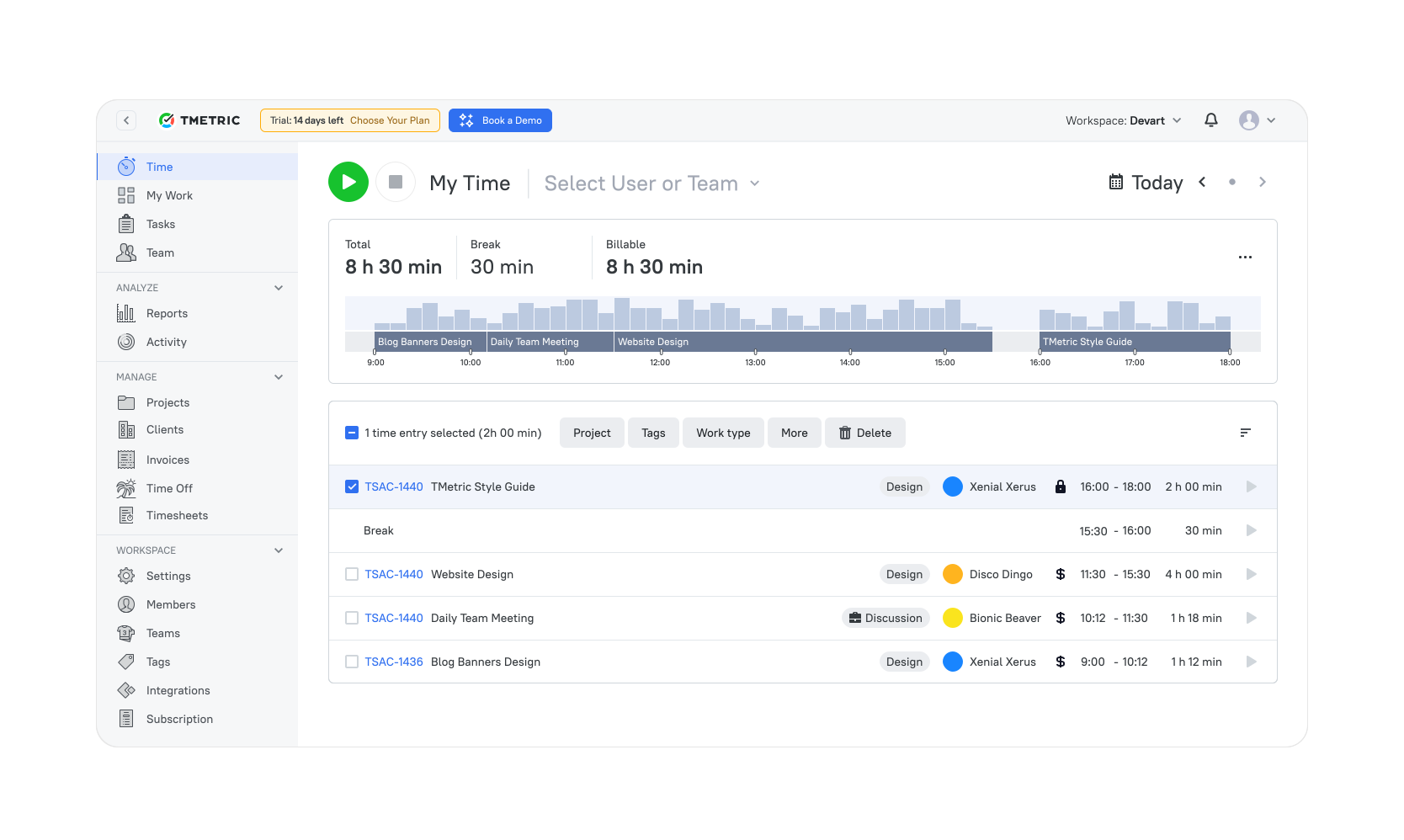
TMetric offers the strongest link between tracked work and agency billing, making it ideal for creative agencies, marketing teams, software development firms, and any team needing airtight visibility into billable hours. Once a project’s time is tracked inside TMetric, invoicing becomes automatic—no exporting, no spreadsheets, no manual entry.
The platform handles multiple billing rates, retainers, fixed-fee projects, and expense reimbursements with ease. For agencies managing international clients, multi-currency support and deep integrations with tools like QuickBooks, Jira, Asana, Trello, and Notion make TMetric one of the most flexible and cost-effective agency billing solutions today.
TMetric key features
- Automatic invoice generation from tracked project time.
- Multiple billing rates: different rates per client, project, team member, or task.
- Billable vs. non-billable time (internal meetings never hit client invoices).
- Detailed line-item invoices with task descriptions from time tracking.
- Expense tracking + reimbursement (software, travel, receipts).
- Retainer billing with auto-deduction of hours.
- Fixed-fee project billing with internal profitability tracking.
- Invoice customization: logo, payment terms, agency branding.
- Multi-currency support.
- 50+ integrations, including QuickBooks, Jira, Asana, Trello, Notion, and more.
Pros
- Excellent time-to-invoice automation.
- Best pricing-to-feature ratio in the entire category.
- Ideal for hourly billing across multiple clients.
- Clean, modern UI with low learning curve.
Cons
- No advanced scheduling module.
- Mobile invoicing features are more limited than desktop.
Ratings
- Agency fit score: 4.8/5
- SoftDev fit score: 4.7/5
- Price to value: 4.5/5
- G2 rating: 4.6
- Capterra rating: 4.5
User quote
“TMetric removes all friction between time tracking and billing. It’s the only tool where invoicing literally takes 30 seconds.”
🔗 Learn more on TMetric’s site: https://tmetric.com/feature-billing
2. Harvest — Best all-in-one time tracking + billing
Price: $10.80/user/month
Available on: Web, iOS, Android, macOS, browser extension
Why Harvest
Harvest combines simple time tracking with straightforward invoicing and payment collection. It’s especially strong for project-based agencies that want an end-to-end system without complex accounting features.
Key features
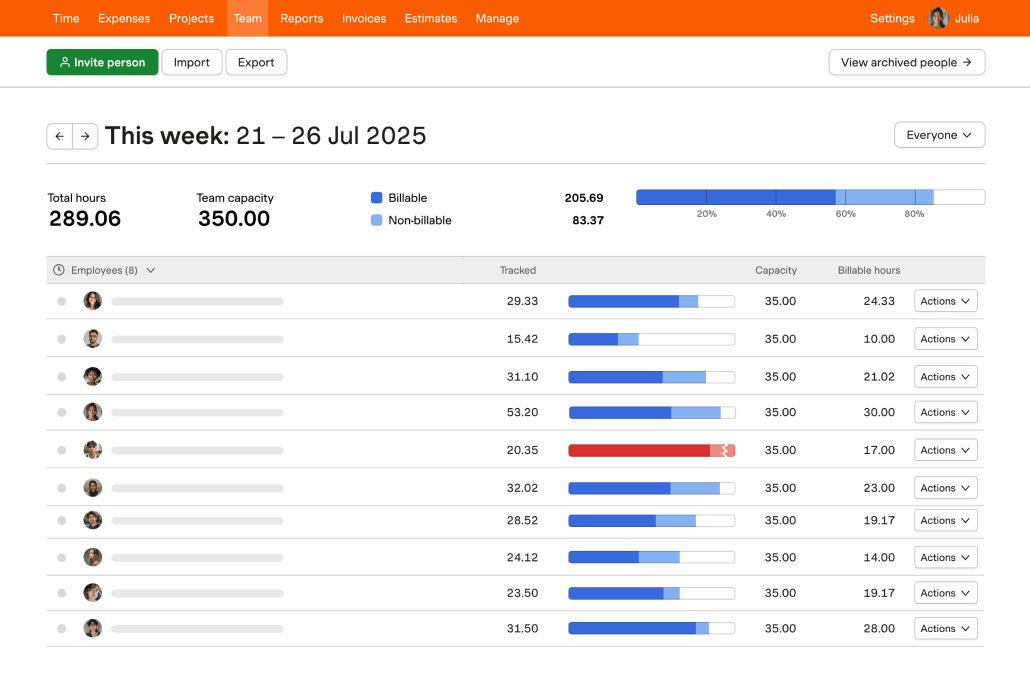
- Time tracking across clients, tasks, and projects.
- Automated invoice automation from timesheets.
- Built-in payment collection via Stripe & PayPal.
- Project expense tracking.
- Reports for billable vs. non-billable utilization.
Integrations: Asana, Trello, Slack, Basecamp, QuickBooks, Zapier
Pros
- Very intuitive for non-technical users
- Strong payment processing
- Good reports for agencies
Cons
- No retainers
- Pricier than TMetric
- Limited rate rules
Scores
- Agency fit score: 4.5/5
- SoftDev fit score: 3.5/5
- Price to value: 4/5
- G2 rating: 4.3
- Capterra rating: 4.6
3. FreshBooks — Best for small agencies prioritizing ease of use
Price: $19/monthAvailable on: Web, iOS, Android
Why FreshBooks
FreshBooks is arguably the easiest agency billing software for small creative teams. It includes simple invoicing, basic time tracking, payment reminders, and client portals that offer a polished client experience.
Key features
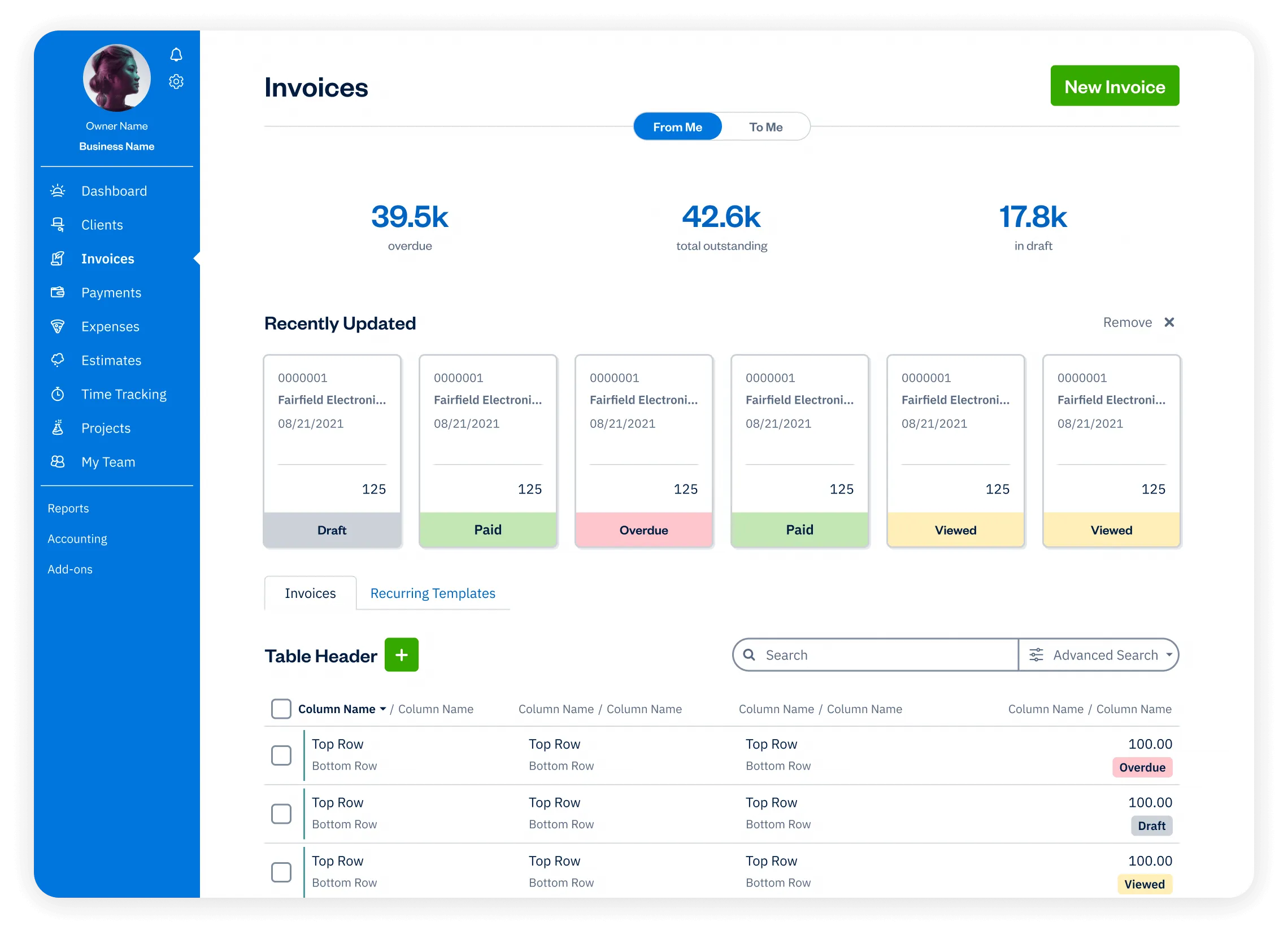
- Easy invoice creation.
- Time tracking + expense tracking.
- Recurring billing.
- Client portal with online payments.
- Basic accounting.
Integrations: G Suite, Stripe, Gusto, Slack, Shopify, Trello
Pros
- Very accessible for new agencies.
- Great client-facing experience.
- Strong payment features.
Cons
- Time tracking isn’t advanced.
- Not ideal for technical agencies.
Scores
4. QuickBooks Online — Best accounting + billing in one system
Price: $15/month (Simple Start)Available on: Web, iOS, Android
Why QuickBooks
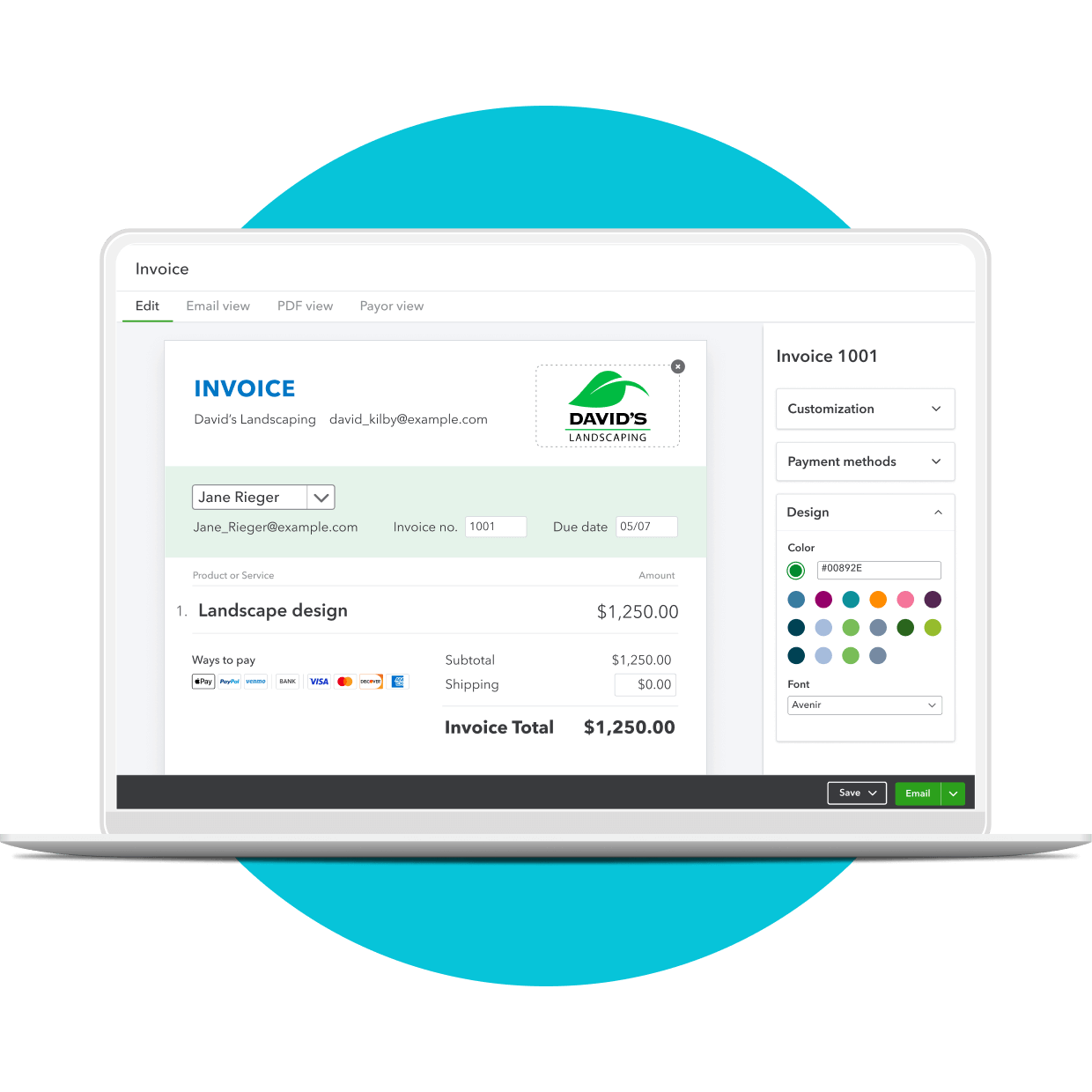
QuickBooks Online is the gold standard for accounting and offers powerful agency billing and invoicing tools when paired with a time tracker like TMetric.
Key features
- Full accounting suite.
- Custom invoices + automated invoice reminders.
- Payment processing.
- Client estimates & quotes.
- Integration with TMetric for time-based invoices.
Integrations: TMetric, HubSpot, Shopify, Stripe, hundreds more
Pros
- Ideal for agencies needing accounting + billing.
- Strong reporting.
- Industry-standard for bookkeeping.
Cons
- Time tracking requires integrations.
- Higher learning curve.
Scores
5. Bonsai — Best for freelancers & micro-agencies (1–5 people)
.webp)
Price: $25/monthAvailable on: Web, iOS, Android
Why Bonsai
Bonsai is mostly used by small creative teams or solo folks who just want everything in one spot. It handles contracts, proposals, time tracking, and billing without needing a bunch of different tools. It’s easy to set up and works well if you’re still getting your agency off the ground.
Key features
- Templates for contracts and proposals.
- Basic project time tracking.
- Auto and recurring invoices.
- Small built-in client CRM.
- Works with Zapier, Google Calendar, and Slack.
Integrations: Zapier, Google Calendar, Slack
Pros
- Simple to use from day one.
- Clean layout.
- Handy templates for new agencies.
Cons
- Price goes up once you add extras.
- Larger teams usually outgrow it.
Scores
Other billing software for agencies
Beyond the top choices, several other platforms show up often in agency stacks. They’re not as widely used, but they’re solid fits depending on your size and workflow:
- Paymo – Project management + time tracking + billing for 5–20 person agencies
- Scoro – End-to-end agency management with billing for 20–100 person teams.
- Kantata (Mavenlink) – Enterprise PSA with advanced billing and resourcing.
- BigTime – PSA software with robust billing for consultancies & law firms.
- Teamwork – Agency project management with integrated time tracking & billing.
- Wrike – Work management with billing for mid-size to large agencies.
- Wave – Free invoicing + accounting for micro-agencies (ad-supported).
How to Pick the Right Agency Billing Software
Start with what matters most: time and billing accuracy.
Before comparing advanced features, get clear on the two essentials every agency needs—precise time tracking and reliable payment handling. Any tool that struggles with these basics will only create friction as your team grows.
Choose platforms that streamline your workflow.
Look for software that connects smoothly with the systems you already use—your project management tools, accounting platform, CRM, and payroll provider. Integrations that sync automatically save your team from duplicate work and costly mistakes.
Test each tool with a real project.
Before you fully commit, run one client cycle inside every trial: track hours, generate an invoice, process a payment, and review the reporting. If the tool feels slow or clunky at this stage, it won’t get better when you’re managing dozens of clients and contractors.
Follow these steps and you’ll pick an agency billing platform that reduces admin, improves accuracy, and supports your team’s growth in 2026.
The Takeaway
Choosing the best billing software for agencies depends on whether you bill hourly, fixed-fee, or on retainers. Tools like FreshBooks and Harvest are great for simplicity, while QuickBooks excels in accounting-heavy environments. Bonsai suits micro-agencies.
But TMetric remains our #1 choice because it provides the most seamless link between time tracking and agency billing and invoicing, making it perfect for creative, technical, and marketing agencies billing by the hour.

Useful Resources: