5 Best Agency Billing Software Tools for 2026 (Time Tracking + Pay)
Managing client invoices, tracking billable hours, and handling team payments can quickly become overwhelming for growing agencies. The right billing software helps streamline all these processes. Here, we compare the 5 best agency billing software tools for 2026 to help you find the perfect solution for your business.

By Dereck Mushingairi | April 10, 2026
Most agency billing problems don’t come from bad math. They come from missing hours, messy handoffs between tools, and last-minute invoice cleanup that nobody enjoys doing. By the time an invoice goes out, the team has already moved on — and finance is left stitching things together.
In 2026, that approach just doesn’t hold up. Agencies run on tight margins, complex pricing models, and fast delivery cycles. Billing software is no longer a back-office tool; it’s part of how agencies protect profitability, keep cash flow predictable, and maintain client trust.
The best platforms today don’t just send invoices. They pull in tracked work automatically, apply the right rates, handle retainers and fixed-fee projects, support multiple currencies, and sync with accounting tools like QuickBooks. When billing works properly, it fades into the background. This is exactly what agencies want.
This guide breaks down the best agency billing software tools for 2026, chosen for how well they perform in real agency workflows.
What agency billing software actually does
At its core, agency billing software connects delivery work to revenue. It takes time entries, expenses, project budgets, and client agreements and turns them into clean, accurate invoices without manual assembly.
Instead of pulling numbers from spreadsheets or multiple systems, agencies get a live view of what’s billable, what’s already billed, and how projects are performing financially — while work is still in progress.
Core functions agencies rely on
| Function | Why it matters |
|---|---|
| Time-to-invoice flow | Converts tracked work directly into billable line items |
| Rate management | Applies hourly, blended, retainer, or fixed-fee pricing correctly |
| Project financials | Shows burn rate, margins, and budget health |
| Client billing | Produces clear, defensible invoices |
| Accounting sync | Keeps finance and billing aligned automatically |
When these pieces work together, billing becomes predictable instead of reactive.
Questions agencies should answer before choosing billing software
Before comparing tools, it’s worth stepping back. Most billing issues aren’t caused by missing features — they’re caused by tools that don’t match how agencies actually work.
Will the team reliably capture the data?
Billing only works if time and expenses are logged consistently. The software needs to fit naturally into daily workflows so people don’t forget, delay, or avoid entering data.
If logging work feels slow or disruptive, accuracy drops fast.
Can it support the billing models we really use?
Agencies rarely stick to a single pricing structure. Hourly work, monthly retainers, fixed-fee projects, and blended rates often coexist — sometimes for the same client.
The billing system should support these models natively, without manual overrides or spreadsheet fixes.
Does it give clear financial answers, fast?
When questions come up — from leadership, finance, or clients — the system should already have the answers.
You should be able to see:
- What work was done
- How rates were applied
- Whether a project is still profitable
- Why an invoice totals what it does
If billing requires explanations, the system isn’t doing its job.
How we selected the top agency billing tools for 2026
We focused less on feature lists and more on how tools behave in real agency environments. The goal was to surface platforms that reduce friction, not add to it.
Evaluation approach
| Area | What we looked for |
|---|---|
| Accuracy | Reliable conversion of work into invoices |
| Automation | Fewer manual billing steps |
| Flexibility | Support for changing pricing models |
| Integrations | Clean connections to accounting and project tools |
| Usability | Fast adoption across teams |
| Scalability | Ability to grow with the agency |
Only tools that consistently deliver accurate, low-friction billing across these areas made the list.
5 top billing tools for 2026
Let’s explore the billing platforms that stand out for 2026, each helping agencies simplify invoicing, manage client budgets, and keep billable work organized.
1. TMetric
🌟 4.6/5
Best for: Agencies that bill by the hour.
Price: Free; paid plans from $7–$9/user/month.
Available on: Web, iOS, Android, macOS, Windows, Linux.
What makes TMetric stand out
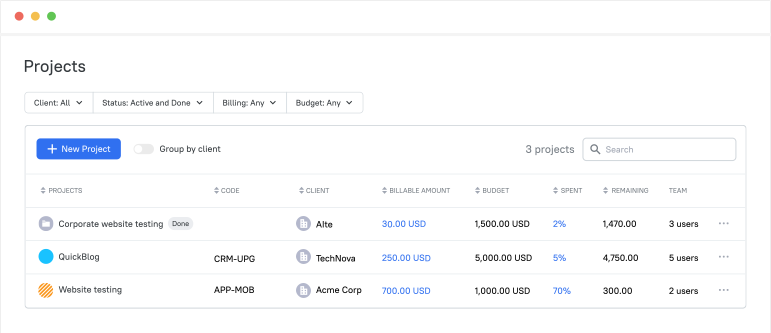
TMetric offers one of the cleanest links between tracked hours and billable revenue. Once time is logged, the platform can generate invoices automatically, apply different billing rates, handle retainers, track expenses, and support fixed-fee projects, all in one place. It integrates with Jira, Asana, Trello, Notion, and QuickBooks, making it easy to fit into existing workflows.
TMetric works particularly well for agencies managing multiple clients or rate structures, giving them real-time clarity into billable hours and accuracy when invoicing.
Key TMetric features
Automatic invoice generation
TMetric links time tracking directly to billing, turning detailed work logs into clean, itemized invoices without manual formatting. Every billable entry is captured, categorized, and organized automatically, so agencies no longer need to rebuild invoices from exported spreadsheets or fragmented reports.
Flexible billing rates
Agencies often manage different rate structures across clients and projects, and TMetric adapts to all of them. You can define unique rates at the project, task, or team-member level, or mix them as needed. Internal work or non-billable activities can be separated with a single flag, keeping invoices accurate and transparent.
Retainers, fixed-fee billing & expense tracking
TMetric supports the full range of billing models used by agencies, making it easy to maintain predictable revenue and clean client reporting.
- Automatic deduction from active retainers.
- Profitability tracking for fixed-fee or milestone-based work.
- Ability to add expenses, receipts, and reimbursable items directly to invoices.
This ensures that every financial component tied to a project (hours, costs, and deliverables) stays visible and organized.
Integrations across 50+ tools
TMetric works seamlessly within existing agency ecosystems. Whether your team uses project management platforms or accounting suites, the integrations keep data consistent and reduce administrative work.
Tools supported include QuickBooks, Asana, Trello, Jira, Notion, and many more.
TMetric pricing overview (monthly vs. annual)
| Plan | Billed monthly | Billed annually | Includes |
|---|---|---|---|
| Free | $0 | $0 | Core time tracking, unlimited projects & clients |
| Professional | $7/user | $5.83/user | Rates, budgets, invoicing, expenses, calendar sync |
| Business | $9/user | $7.50/user | Time Off, screenshots, activity tracking, QuickBooks sync |
| Enterprise | Custom | Custom | Priority support, secure deployment, custom integrations |
What TMetric users say
Overall, I've enjoyed using TMetric; it far outperforms any other system I've used in the past, and I'll definitely be sticking with it for the long haul. — Charlotte N.
Why it’s #1
- Designed for accurate agency billing: TMetric links tracked work, rate rules, retainers, and expenses into one streamlined system, making hourly and mixed-model billing easy to manage.
- Clear, reliable financials: Invoices, project totals, and billed amounts stay consistent because every hour and cost flows directly from tracked activity, giving agencies dependable visibility into revenue.
- Trusted across teams of all sizes: TMetric supports small studios and multi-client agencies alike, backed by strong integrations and a pricing model that scales without complexity.

2. Harvest
🌟 4.3/5
Best for: All-in-one time tracking + billing.
Price: Starts around $10.80/user/month.
Available on: Web, iOS, Android, macOS, browser extensions.
What makes Harvest stand out
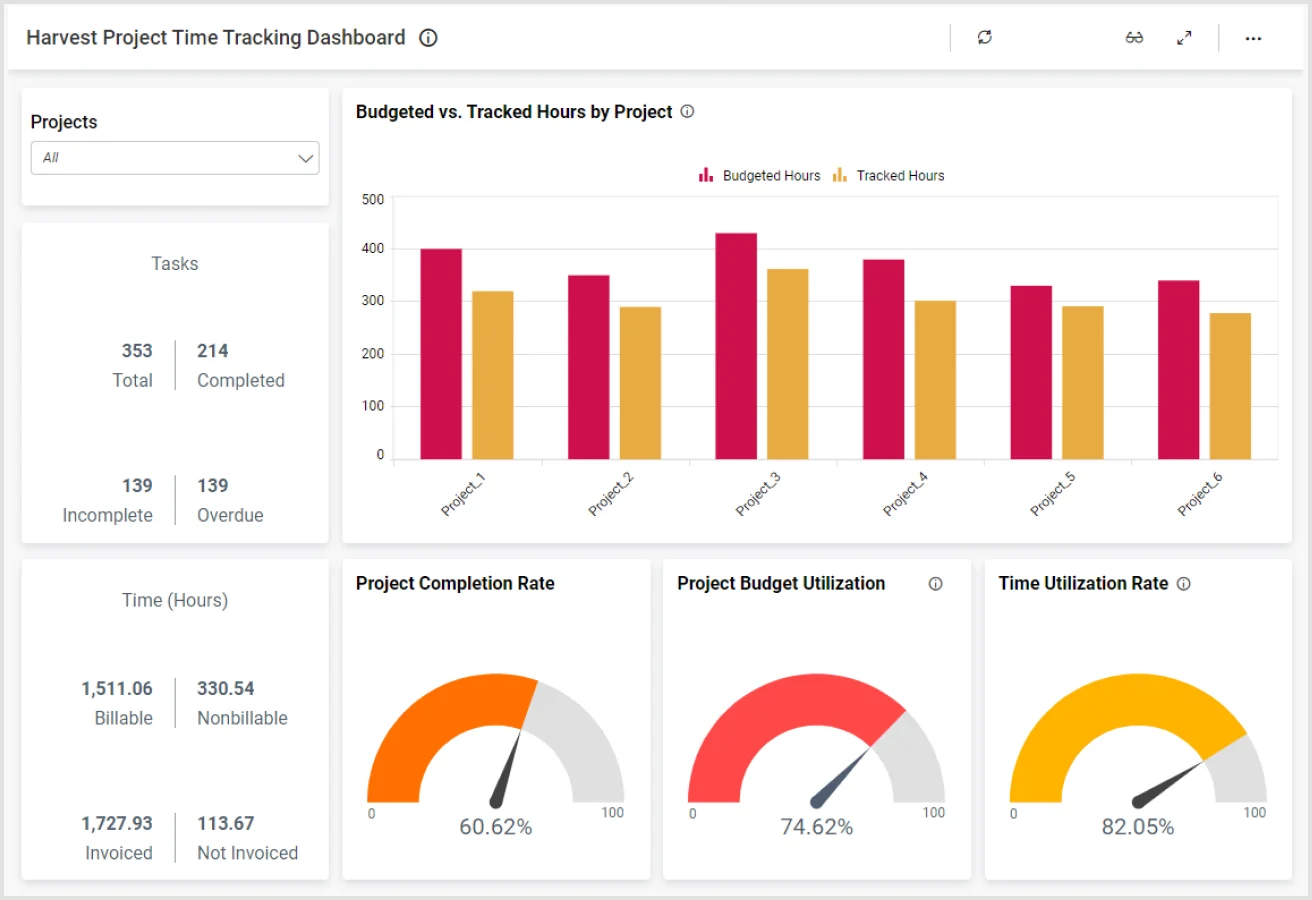
Harvest blends simple time tracking with straightforward billing tools, making it ideal for agencies that want an integrated hourly → invoice pipeline but don’t need advanced accounting. It handles timesheet collection, applies budgets, tracks expenses, and generates invoices with integrated payment processing. For small and mid-size agencies, it offers an easy, fast workflow with minimal setup.
Key features
- Hourly time tracking tied to projects and tasks.
- Automated invoice creation from approved time sheets.
- Online payments via Stripe and PayPal.
- Expense uploads with receipts.
- Billable vs non-billable utilization insights.
- Integrations with Trello, Asana, Basecamp, Slack, and QuickBooks.
What users are saying
“Harvest is a comprehensive system that offers advanced and innovative resources for recording and monitoring your work projects, allowing you to manage your time across your organization's operations and work projects. I can also say that Harvest is an ideal system for coordinating and visualizing your work activities, enabling effective and secure collaboration among all members of your work team.”
3. FreshBooks
🌟 4.5/5
Best for: Small agencies prioritizing ease of use.
Price: Starts around $19/month.
Available on: Web, iOS, Android.
What makes FreshBooks stand out
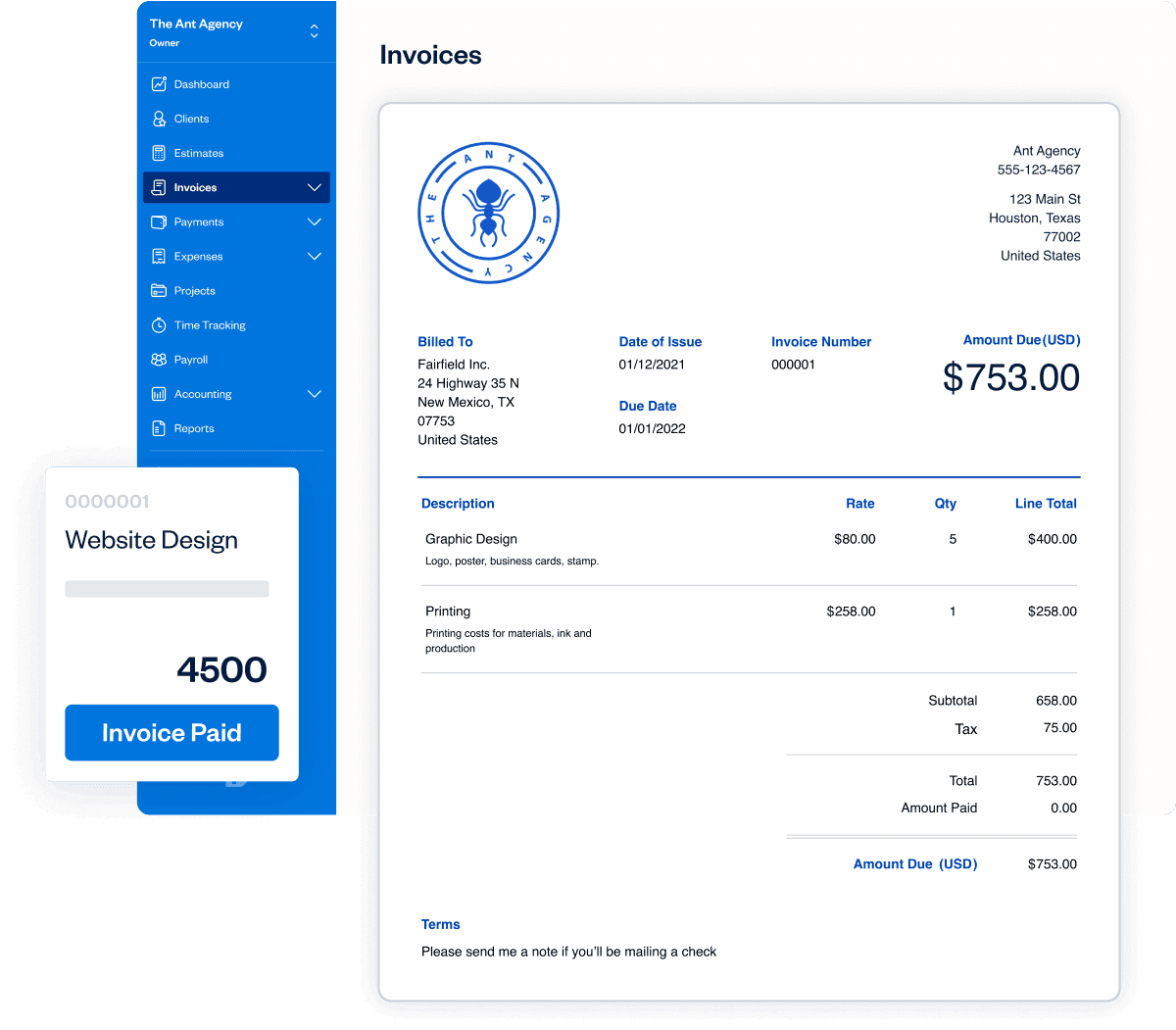
FreshBooks is built for smaller creative teams that want clean invoices, simple billing structures, and easy client-facing experiences. With recurring invoices, automated reminders, time & expense tracking, and a polished client portal, it removes administrative headaches for agencies that need reliability without complexity.
Key features
- Drag-and-drop invoice creation.
- Time tracking integrated with billing.
- Recurring invoices + automation.
- Invoices with online payment options.
- Light accounting for small teams.
- Integrations with Stripe, GSuite, Slack, and Shopify.
What users are saying
“It's such a refreshing software to use and very simple and user-friendly ux. Easy to navigate through the application.” (Capterra)
4. QuickBooks Online
🌟 4.5/5
Best for: Agencies needing accounting + billing in one system.
Price: Starts around $15/month.
Available on: Web, iOS, Android.
What makes QuickBooks Online stand out
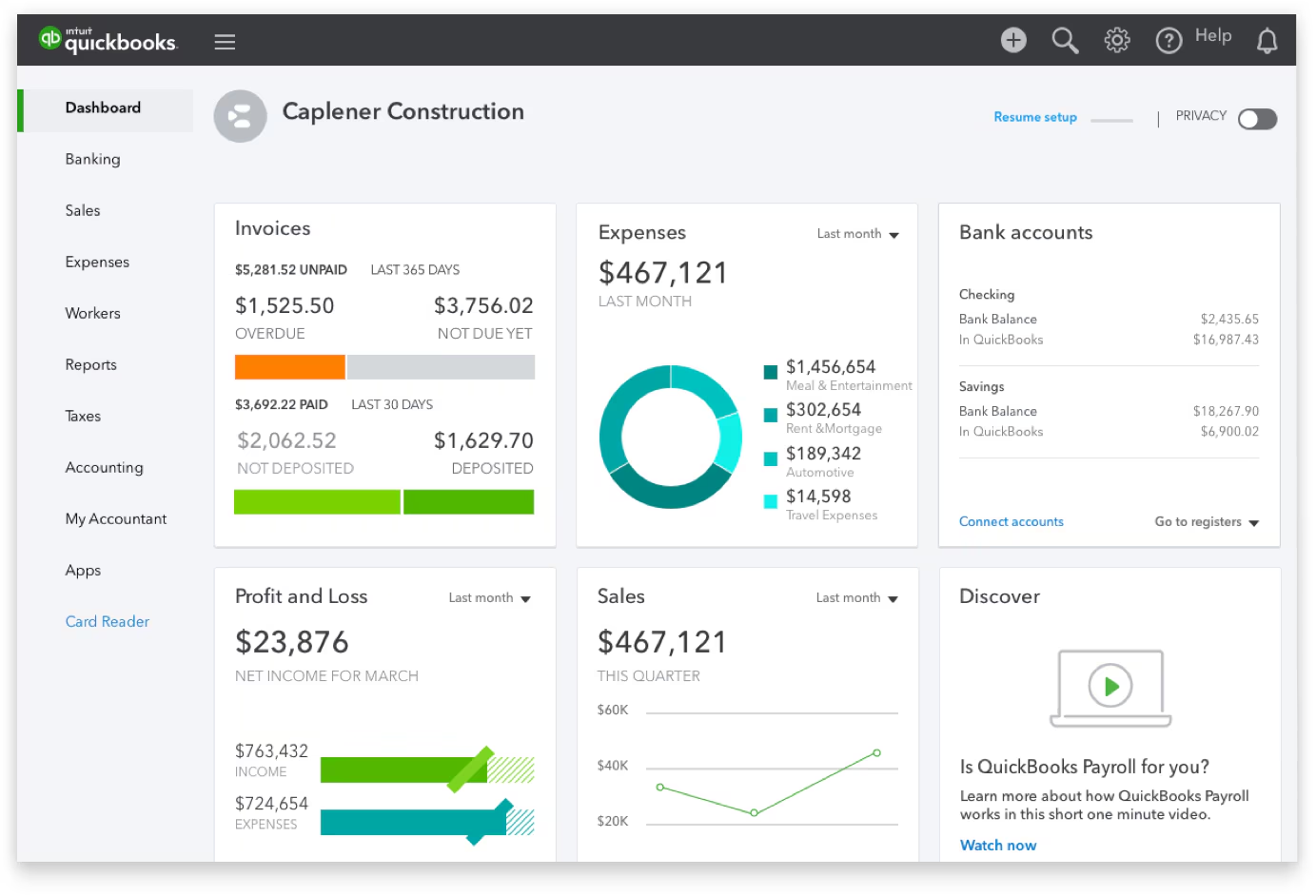
QuickBooks Online remains the default accounting system for many agencies, offering strong billing workflows, automated reminders, payment integrations, and deep reporting. When connected with a time tracker like TMetric, it becomes a complete accounting and billing ecosystem capable of handling complex revenue flows.
Key features
- Full accounting suite with financial reporting.
- Custom invoices + automation features.
- Payment processing and invoice tracking.
- Estimates & quotes for proposal workflows.
- Direct integration with TMetric for billable hours.
- Integrations with HubSpot, Shopify, Stripe, and more.
What users are saying
“Very good and efficient! I use this daily to keep our accounts up to date and payments flowing in. It's Great.”
5. Bonsai
🌟 4.3/5

Best for: Freelancers & micro-agencies (1–5 people).
Price: Typically starts around $25/month.
Available on: Web, iOS, Android.
What makes Bonsai stand out
Bonsai consolidates contracts, proposals, time tracking, billing, and CRM functions into one streamlined tool. It's particularly valuable for teams just beginning to formalize their operations. Its all-in-one approach ensures small agencies don’t need multiple tools to manage basic client operations.
Key features
- Contract & proposal templates.
- Project-level time tracking.
- Auto and recurring invoices.
- Lightweight CRM.
- Integrations with Zapier, Google Calendar, and Slack.
What users are saying
“Our overall experience with Bonsai has been lovely so far. We can create estimates to send to our customers, invoices, and even get the signature electronically!”
TL;DR
| Tool | Starting price | Free plan details | Ratings (G2 / Capterra, approx.) | Editorial Agency Fit | Editorial SoftDev Fit |
|---|---|---|---|---|---|
| TMetric | Starts around $7/user/mo | Free plan available for small teams | ~4.6 / ~4.5 | 4.8/5 | 4.7/5 |
| Harvest | Starts around $10.80/user/mo | Free plan limited to 1 user & basic projects | ~4.3 / ~4.6 | 4.5/5 | 3.5/5 |
| FreshBooks | Starts around $19/seat | Lower tiers may limit time tracking features | ~4.5 / ~4.5 | 4.5/5 | 4.0/5 |
| QuickBooks Online | Starts around $15/mo | Time tracking requires integrations | ~4.5 / ~4.3 | 4.2/5 | 4.0/5 |
| Bonsai | Starts around $25/mo | Client limits vary by plan | ~4.3 / ~4.6 | 4.3/5 | 3.8/5 |
Other billing tools agencies consider
If the main five tools aren’t an exact match, these alternatives offer strong features depending on your agency size and workflow:
- Paymo – Combines project management, time tracking, and billing for small to mid-size teams.
- Scoro – Full agency operations platform with billing, quoting, and project oversight.
- Kantata (Mavenlink) – Enterprise PSA with deep billing, resourcing, and analytics.
- BigTime – PSA solution favored by consulting, accounting, and legal firms.
- Teamwork – Agency project platform with integrated time tracking & billing.
- Wrike – Work management tool with configurable billing for mid to large teams.
- Wave – Free invoicing and accounting for micro-agencies or early-stage freelancers.
Which agency billing software should you pick?
For agencies looking for a reliable, streamlined way to turn tracked work into accurate invoices without piling on extra admin, TMetric stands out as the top choice for 2026. It’s straightforward for any team to adopt, yet powerful enough to support complex rate setups, retainers, and multi-client billing.
- Looking for a tool that keeps tracking and invoicing under one roof? → Harvest
- Want a billing system designed around simplicity and client experience? → FreshBooks
- Need billing features combined with full accounting controls? → QuickBooks Online
- Running a freelance practice or tiny studio and want everything in one toolkit? → Bonsai
How much does agency billing software cost in 2026?
Most agency billing platforms fall into a clear, predictable pricing band. Based on current published pricing across leading tools:
- Core plans typically range from $12 to $15 per user/month. This is where most billing-focused systems sit, especially those offering retainers, rate rules, automated invoicing, and expense management. Teams that rely on monthly billing cycles benefit most from platforms with automated invoicing and retainer support.
- Free plans exist, but with limits. They usually restrict the number of clients you can bill, reduce reporting capabilities, or cap key features like recurring invoices or multi-currency billing.
- Higher-tier or accounting-integrated plans cost more. Tools that bundle full bookkeeping, advanced reporting, or payment processing, such as QuickBooks Online or certain FreshBooks tiers, price higher depending on feature depth.
- For a 20–30-person agency, expect monthly spend in the low hundreds. Even with $12–$15 per user pricing, the overall cost remains modest compared to the value gained from accurate billing and predictable cash flow.
In general, the right billing tool pays for itself quickly by reducing missed billables, improving cash flow, and eliminating manual processes that slow down month-end close.
The Takeaway
From TMetric’s deep connection between tracked hours and accurate invoicing, to the simplicity of Harvest and FreshBooks, every tool in this list serves a different agency profile. But for teams that need precision, flexibility, and automation around hourly billing, TMetric consistently offers the strongest balance of capability and affordability.
The most effective billing tool is the one your team will use consistently. When billing becomes seamless and fully integrated with your project workflows, client finances become more predictable, profitability becomes clearer, and your agency can scale without administrative friction.